
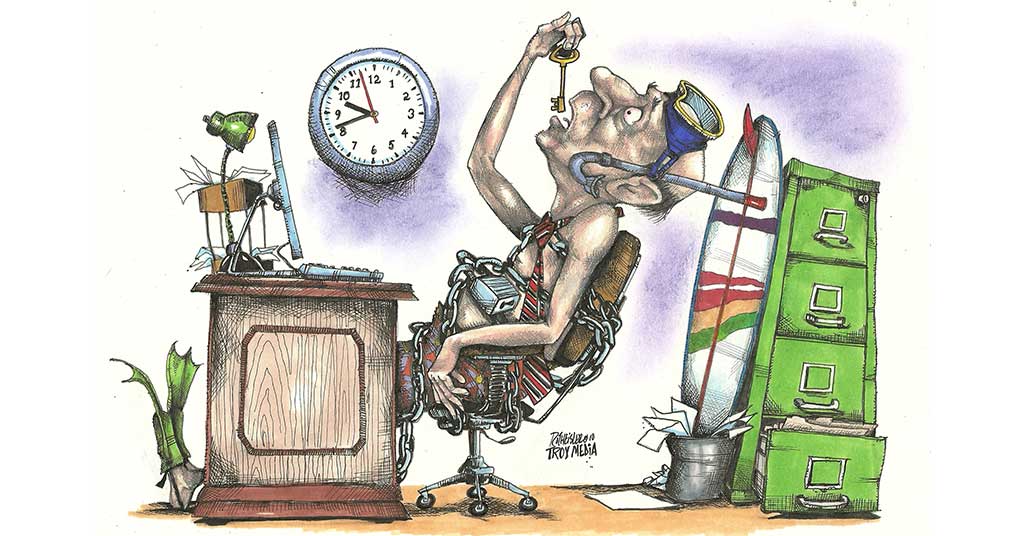
As debt charges eat a billion dollars a week, unions still resist Ottawa’s push to save money

Now Ottawa’s government union bosses are worried about services?
Really?
After the government rubber-stamped hundreds of millions in bonuses, added tens of thousands of bureaucrats, dished out pay raises and struggled to meet half of its performance targets, now union bosses are worried about services?
The Carney government launched a spending review in early July, and Ottawa’s union bosses are crying Chicken Little, warning the sky will fall if any savings are made.
The Canadian Union of Public Employees called the potential savings “draconian rollbacks” and promised to “fight to defend against the devastating impacts that Mr. Carney’s cuts will have.”
The Public Service Alliance of Canada says government savings “will hurt everyone in Canada who depends on vital public services.”
If more government spending and bureaucrats meant better results, why is everything from potholes to hospital wait times still a problem? All taxpayers seem to get out of the bureaucrat hiring binge are higher taxes and a bigger debt bill.
The numbers behind the bulging bureaucracy are bonkers.
The federal bureaucracy cost taxpayers $40 billion in 2016. The bureaucracy now costs taxpayers about $70 billion. That’s more than a 70 per cent increase.
Ask yourself: are you seeing anywhere close to 70 per cent better services from Ottawa’s bureaucracy?
Taxpayers are paying for 99,000 more bureaucrats today than 10 years ago. Taxpayers would save about $7 billion annually had the federal bureaucracy grown in line with population growth over the last decade.
The Canada Revenue Agency added the second-greatest number of employees over the decade, adding 13,015 employees since 2016—a 33 per cent increase.
Are you finding it any easier to get a hold of CRA bureaucrats?
“We’re flooded with complaints,” the taxpayers’ ombudsperson said, as filings about the CRA spiked 45 per cent from pre-COVID levels.
The government also rubber-stamped more than $1.5 billion in bonuses since 2015 and handed out more than one million pay raises over the last four years.
What have bureaucrats done to merit extra taxpayer cash?
The government posts data on department performance results for the last five years. In three of those years, departments couldn’t meet half of their own targets. Their best year was 2023, when departments met 52 per cent of their own targets.
Instead of fearmongering, government union bosses should be honest with their members about a simple truth: the biggest threat to bureaucrats’ paycheques is interest on the debt.
It’s not political ideology or pressure campaigns that will ultimately lead to government employees, nurses or teachers getting fired. It’s debt and the quicksand of compound interest.
To understand this lesson, look at what happened under Saskatchewan’s NDP government in the 1990s.
Saskatchewan had to face its deficit addiction by enduring “a lot of pain,” according to former finance minister Janice MacKinnon, whose government closed 52 hospitals across the province.
“We left a fiscal situation in Saskatchewan until it was a crisis and so we had to make dramatic cuts to fundamental programs and raise taxes to get out of the situation,” MacKinnon said.
Today, federal debt interest charges cost taxpayers more than $1 billion every week. That’s a brand new hospital that isn’t built every week because that money is going to the bond fund managers on Bay Street instead.
In fact, the government wasted more money paying interest on the debt last year than it sent to provinces in health transfers.
And as bad as things are today, it will get worse without spending restraint.
Debt interest charges are expected to balloon from $54 billion last year to $70 billion by 2029.
Government union bosses seem ready to fearmonger over attempts to find savings. But the reality is the government must start saving money today or the cuts will be much bigger tomorrow.
Franco Terrazzano is the Federal Director of the Canadian Taxpayers Federation.
Explore more on Federal debt and deficit, Federal taxes, Carney government, Public sector
The views, opinions, and positions expressed by our columnists and contributors are solely their own and do not necessarily reflect those of our publication.
Troy Media empowers Canadian community news outlets by providing independent, insightful analysis and commentary. Our mission is to support local media in helping Canadians stay informed and engaged by delivering reliable content that strengthens community connections and deepens understanding across the country.

