
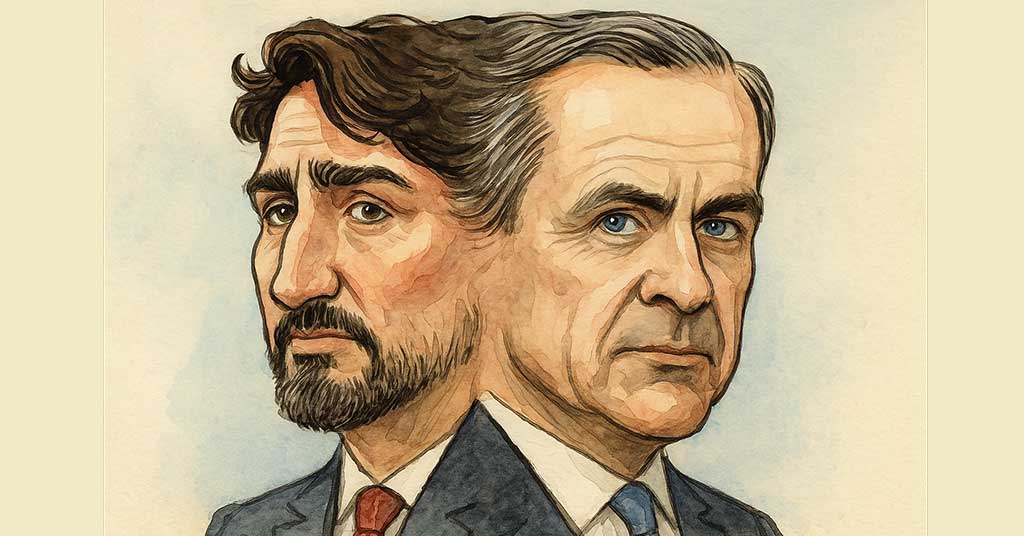
Carney was supposed to herald change, but housing and affordability pressures are still hitting Canadians hard

Canadians voted for change in April 2025, choosing Mark Carney as prime minister. But months into his leadership, the same old problems—unaffordable housing, rising debt, stagnating wages—remain. Carney, once hailed as a financial saviour, now looks more like a polished steward of the status quo than a reformer.
His background as a former governor of the Bank of Canada and the Bank of England earned him a reputation as a steady hand during turbulent times. His global profile and polished demeanour offered the promise of competence and credibility. However, his approach so far suggests continuity rather than change. Many of the policies shaping the current landscape appear to build on, rather than depart from, the Trudeau years.
While his arrival was greeted by many in the political and economic establishment as a new chapter, for everyday Canadians grappling with affordability and access to services, the gap between expectations and outcomes remains wide. The question is no longer whether Carney can bring order to complex systems—it’s whether he understands the urgency of tackling structural barriers that weigh down Canadians’ economic prospects.
These concerns became especially clear in a recent conversation I had with Bruce Pardy, professor at Queen’s University, and Dan McTeague, former Liberal MP and president of Canadians for Affordable Energy, about the June 2 First Ministers’ Meeting in Saskatoon, a gathering of the prime minister and provincial premiers to discuss national priorities.
Both voiced concerns about the summit’s impact. Both suggested the gathering leaned more toward symbolism than substantive economic reform.
Carney’s technocratic style, emphasizing top-down economic management, reflects a belief that prosperity can be orchestrated through expert planning. But as Pardy put it, “Whatever you heard at the Saskatchewan meetings doesn’t matter a hill of beans. Governments don’t build economies. People do.”
Government-led initiatives—such as national energy strategies and net-zero mandates—may be well-intentioned, but critics argue they risk overlooking the importance of local innovation, market freedom and individual enterprise. Too often, these programs are rolled out without proper coordination with the provinces or attention to regional economic differences.
McTeague was equally blunt, describing the summit as “more theatre than it is, in fact, practical or necessary.” He observed that while premiers issued joint statements, core structural issues like interprovincial trade barriers and regulatory overlap remained unaddressed.
Beyond the lack of substantive reform, even the summit’s slogan, “building one Canadian economy,” a phrase intended to signal unity and collaboration across provinces, sparked debate. For some, it highlighted long-standing barriers that fragment the national market, such as labour mobility and transportation hurdles. These complications continue to frustrate efforts to create seamless economic integration.
This frustration is especially acute in provinces like Alberta and Saskatchewan. “Alberta, in a sense, is the cash cow of Confederation,” said Pardy. “And the people who have power in Confederation are not going to be open to the idea that the arrangement has to be fixed.” Calls for greater autonomy for Western provinces are not rooted in ideology but in years of perceived inequity and exclusion from decision-making in Ottawa.
Stepping back from the summit itself, the challenges Canada faces, including housing affordability, immigration pressures and health care delays, are real and pressing. Carney did not create these issues, but his government has yet to offer bold departures from the status quo. A clearer vision for tackling affordability, economic growth and service delivery is still awaited.
Canadians don’t just want refined messaging or polished leadership—they want results. And while new leadership always brings hope, what matters most is whether long-standing issues are being meaningfully addressed.
So far, for many, that change still feels out of reach.
David Leis is President and CEO of the Frontier Centre for Public Policy and host of the Leaders on the Frontier podcast.
Explore more on Carney government, Federal politics, Canadian economy, Federal-provincial relations
The views, opinions, and positions expressed by our columnists and contributors are solely their own and do not necessarily reflect those of our publication.
Troy Media empowers Canadian community news outlets by providing independent, insightful analysis and commentary. Our mission is to support local media in helping Canadians stay informed and engaged by delivering reliable content that strengthens community connections and deepens understanding across the country.

