
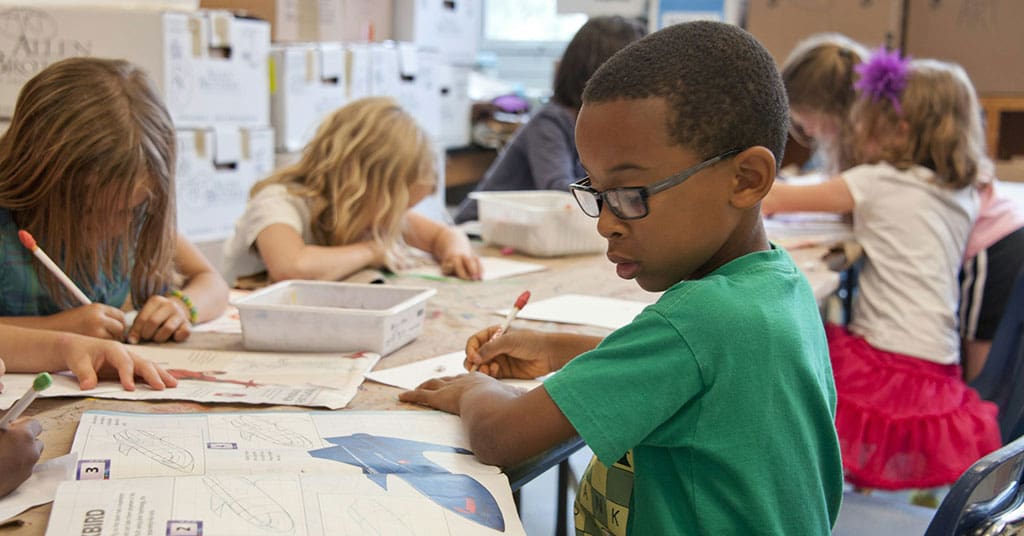
Vouchers would put parents back in charge of their children’s education

Canada’s math ranking has plunged from 29th to 34th since 2015, its worst-ever showing, according to the latest Trends in International Mathematics and Science Study (TIMSS). Science scores slipped as well. TIMSS is an international test comparing students in dozens of countries, and Canada’s drop signals real trouble for our future competitiveness.
These aren’t temporary setbacks. They expose a systemic failure. Students are still assigned to schools by postal code, giving local schools a monopoly that too often leaves families without real choice. The public system is failing families, and the cost is measured in lost opportunities for every child.
The solution isn’t more bureaucracy. Provinces must adopt school vouchers to give parents control, force schools to compete, and raise standards. A voucher is public funding that follows the student, giving families a portable scholarship they can use at the public or independent school of their choice. With provinces spending an average of $16,579 per student, a full-value voucher would help families secure an excellent education wherever it is offered.
That matters because education shapes a child’s future, yet parents in many provinces have little say in where or how their children are educated. When schools don’t need to earn parents’ trust, quality can suffer.
Vouchers address this directly by making schools compete for enrolment. And when schools compete, outcomes improve, a principle true in business and education alike.
Canada can learn from the Netherlands and Sweden. The Dutch have operated a national voucher system since 1917, with about 70 per cent of students attending privately managed but publicly funded schools. Sweden introduced universal vouchers in 1992, shifting from a centralized model to one where about 20 per cent of students now attend independent schools. While Canada’s TIMSS rankings declined, both of those countries maintained or improved theirs.
A credible Canadian voucher system would require independent schools to meet basic standards, but without imposing the restrictive hiring, curriculum, and labour rules that weigh down public schools. Freed from regulation, educators could innovate with teaching methods and programs that better meet diverse student needs.
Critics argue vouchers favour the wealthy. But properly designed, means-tested vouchers provide real support to low-income families and those with special needs children. Vouchers won’t erase inequality, but they guarantee more choice than families have today.
Independent schools aren’t just elite academies. Many are modest community or faith-based schools, and they frequently report stronger academic results than their public counterparts. Vouchers would give more families the ability to consider these alternatives. Waitlists for many independent schools in provinces such as British Columbia and Ontario show that demand already exceeds supply. Enrolment in independent schools also rose 23.8 per cent between 2006 and 2022, compared with only 4.5 per cent growth in public schools. Homeschooling has also expanded, another sign of frustration with the status quo.
This surge in demand reflects more than a search for quality. Across Canada, recurring curriculum wars have turned classrooms into political battlegrounds. Vouchers ease this conflict by letting different philosophies coexist. Parents can choose the approach that fits their children instead of having one imposed by government.
Public schools need not fear vouchers. If they deliver quality education, parents will choose them, and good teachers will be in high demand across all schools.
So long as public money funds education, it shouldn’t matter where that education occurs, only that it’s effective. And the best judges of effectiveness aren’t bureaucrats. They’re parents.
Every year of delay risks leaving another cohort of students with a substandard education. Other countries have embraced vouchers and improved their educational competitiveness. Canadian families remain stuck with postal-code monopolies and bureaucratic inertia.
It doesn’t have to be this way. As parents grow frustrated with failing schools and declining scores, vouchers offer a proven way to reverse Canada’s academic slide, empower families, and unleash competition. For a country that prides itself on fairness and opportunity, school choice should be seen as a natural extension of Canadian values.
The choice, quite literally, is ours.
Conrad Eder is a policy analyst at the Frontier Centre for Public Policy.
Explore more on School choice, Education reform, Homeschooling, Parental rights
The views, opinions, and positions expressed by our columnists and contributors are solely their own and do not necessarily reflect those of our publication.
Troy Media empowers Canadian community news outlets by providing independent, insightful analysis and commentary. Our mission is to support local media in helping Canadians stay informed and engaged by delivering reliable content that strengthens community connections and deepens understanding across the country.

