
Carney says he cut taxes, so why are Canadians paying more?
What Prime Minister Mark Carney gives with his left hand, he takes away with his right hand.
Canadians are already overtaxed and need serious tax cuts to make life more affordable and make our economy more competitive. But at best, the new year will bring a mixed bag for Canadian taxpayers.
The federal government is cutting income taxes, but it’s hiking payroll taxes. The government cancelled the consumer carbon tax, but it’s hammering Canadian businesses with a higher industrial carbon tax.
The federal government cut the lowest income tax bracket from 15 to 14 per cent. That will save the average taxpayer $190 in 2026, according to the Parliamentary Budget Officer.
But the government is taking more money from Canadians’ paycheques through higher payroll taxes, primarily Canada Pension Plan and Employment Insurance contributions.
Workers earning $85,000 or more will pay $5,770 in federal payroll taxes in 2026. That’s a $262 payroll tax hike. Their employers will also be forced to pay $6,219.
So Canadians will save a couple of hundred bucks from the income tax cut in the new year, but many Canadians will pay a couple of hundred bucks more in payroll taxes.
It’s the same story with carbon taxes.
After massive backlash from ordinary Canadians, the federal government dropped its consumer carbon tax that cost average families hundreds of dollars every year and increased the price of gas by about 18 cents per litre.
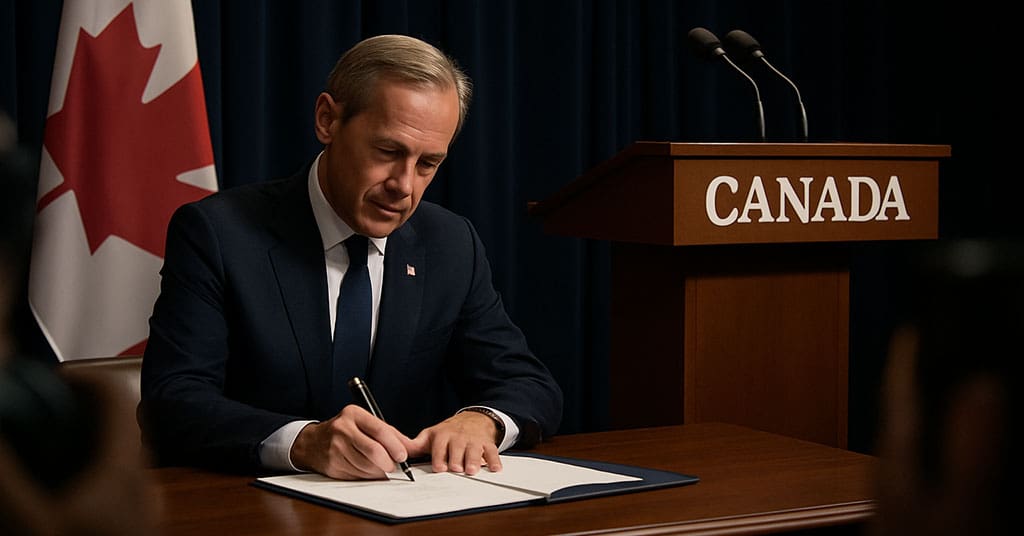
But Carney’s first budget shows he wants higher carbon taxes on Canadian businesses. Carney still hasn’t provided Canadians a clear answer on how much his business carbon tax will cost. He did, however, provide a hint during a press conference he held after signing a memorandum of understanding with the Alberta government.
“It means more than a six-times increase in the industrial price on carbon,” Carney said.
Carney previously said that by “changing the carbon tax … We are making the large companies pay for everybody.”
Carney’s problem is that Canadians aren’t buying what he’s selling on carbon taxes.
Just 12 per cent of Canadians believe Carney that businesses will pay most of the cost of his carbon tax, according to a Léger poll. Nearly 70 per cent of Canadians say businesses will pass most or some of the cost on to consumers.
Canadians understand that it doesn’t matter what type of lipstick politicians put on their carbon tax pig, all carbon taxes make life more expensive.
Carney is also continuing his predecessor’s tradition of automatically increasing booze taxes.
Ottawa will once again hike taxes on beer, wine and spirits in 2026 through its undemocratic alcohol tax escalator.
First passed in the 2017 federal budget, the alcohol escalator tax automatically increases federal taxes on beer, wine and spirits every year without a vote in Parliament.
Federal alcohol taxes are expected to increase by two per cent on April 1, and cost taxpayers $41 million in 2026. Since being imposed, the alcohol escalator tax has cost taxpayers about $1.6 billion, according to industry estimates.
Canadians are overtaxed and need the federal government to seriously lighten the load.
The biggest expense for the average Canadian family isn’t the home they live in, the food they eat or the clothes they buy. It’s the taxes they pay to all levels of government. More than 40 per cent of the average family’s budget goes to paying taxes, according to the Fraser Institute.
Politicians are taking too much money from Canadians. And their high taxes are driving away investment and jobs.
Canada ranks a dismal 27th out of 38 industrialized countries on individual tax competitiveness, according to the Tax Foundation. Canada ranks 22nd on business tax competitiveness. Canada is behind the United States on both measures.
A little bit of tax relief here and there isn’t going to cut it. Carney’s New Year’s resolution needs to be to embark on a massive tax cutting campaign.
Franco Terrazzano is the federal director of the Canadian Taxpayers Federation.
Explore more on Economic policy, Federal taxes, Federal debt and deficit, Carney government
The views, opinions, and positions expressed by our columnists and contributors are solely their own and do not necessarily reflect those of our publication.
Troy Media empowers Canadian community news outlets by providing independent, insightful analysis and commentary. Our mission is to support local media in helping Canadians stay informed and engaged by delivering reliable content that strengthens community connections and deepens understanding across the country.

